
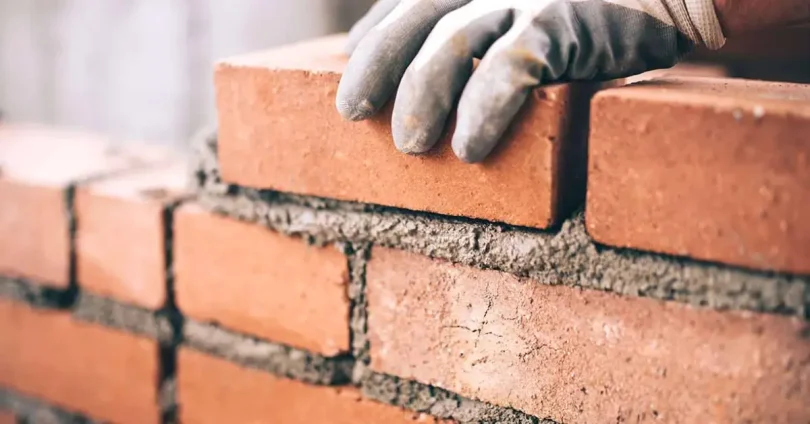

If you are planning to build a brick wall for your home, boundary, room, or other construction project, this brick wall construction guide will help you understand the process from start to finish. Building a strong brick wall is not only about placing bricks one over another. You need proper measurements, a suitable foundation, good-quality materials, correct mortar mixing, accurate brickwork, and proper curing.
Whether you are managing the work yourself or hiring a mason, knowing the basic steps can help you check that the work is being done correctly.
What Is Brick Wall Construction?
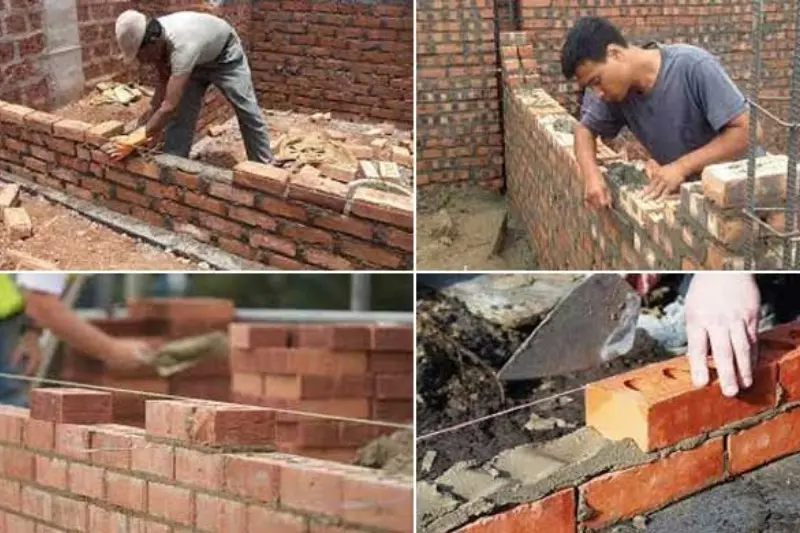
Brick wall construction is the process of building a wall by arranging bricks in specific patterns and joining them with mortar. The wall can be used for exterior walls, interior partitions, boundary walls, garages, sheds, and other structures.
A properly constructed brick wall should be straight, stable, level, and strong enough for its intended purpose.
Materials Needed for Brick Wall Construction
Before starting the work, make sure you have the necessary materials and tools.
Common materials include:
- Bricks
- Cement
- Clean sand
- Water
- Damp-proofing materials where required
- Reinforcement or ties where specified
- Plastering materials
Common tools include:
- Brick trowel
- Spirit level
- Measuring tape
- Mason’s line
- Plumb bob
- Brick hammer
- Mortar pan or mixing equipment
- Shovel
- Bucket
- Water container
The exact materials and quantities depend on the size, type, and purpose of the wall.
Step 1: Plan and Measure the Wall
Start by deciding exactly where the wall will be built. Mark the wall’s length, width, and height according to the approved drawings or construction plan.
Check the location carefully before excavation. You should also consider:
- Door and window openings
- Electrical conduits
- Plumbing lines
- Wall thickness
- Finished floor levels
- Connection with existing walls
Accurate measurements at this stage can prevent expensive corrections later.
Step 2: Prepare the Foundation
A brick wall needs a suitable base. The foundation depth and width depend on soil conditions, wall height, loads, and local construction requirements.
For a load-bearing wall, the foundation is especially important because it transfers the wall’s weight safely into the ground.
The basic process may include:
- Marking the foundation area.
- Excavating the required depth.
- Preparing and compacting the soil.
- Providing the specified foundation material.
- Constructing the footing according to the structural design.
- Checking the level before starting brickwork.
Do not choose foundation dimensions simply based on another building. Soil conditions and structural requirements can be different from site to site.
Step 3: Prepare the Bricks
Good-quality bricks should be selected before construction begins. They should be reasonably uniform in size and free from serious cracks or damage.
Depending on the type of brick being used, the bricks may need to be wetted before laying. This helps prevent dry bricks from rapidly drawing water from the mortar.
However, avoid leaving bricks excessively soaked unless the brick manufacturer’s or project specification says otherwise.
Step 4: Prepare the Mortar
Mortar is used to bond the bricks together. A typical masonry mortar contains cement, sand, and water, but the exact mix should follow the project specification.
Mix the dry materials thoroughly before gradually adding water. The mortar should have a workable consistency that allows the mason to spread it properly without becoming excessively wet.
Do not add too much water just to make the mortar easier to spread. Excess water can affect the quality of the finished masonry.
Step 5: Lay the First Course
The first course is one of the most important parts of brick wall construction.
Spread an appropriate mortar bed over the prepared base and carefully place the first bricks. Check them with a spirit level and measuring tools.
Pay particular attention to:
- Horizontal level
- Wall alignment
- Wall thickness
- Corner positions
- Joint thickness
- Vertical alignment
Take your time with the first course because mistakes here can continue throughout the entire wall.
Step 6: Build the Corners First
Masons often establish the corners before filling in the middle sections of the wall.
Build several courses at the corners and check them with a spirit level or plumb bob. A mason’s line can then be stretched between the corners to guide the intermediate bricks.
This makes it easier to maintain a straight wall.
Step 7: Lay Bricks With Proper Bonding
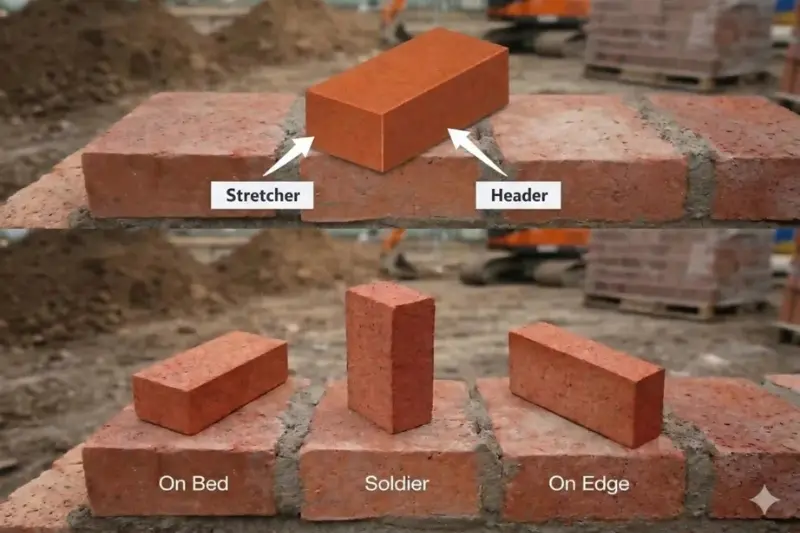
Bricks should be arranged in an appropriate bonding pattern rather than placing all joints directly above one another.
Common brick bonds include:
- Stretcher bond
- English bond
- Flemish bond
- Header bond
The appropriate bond depends on the wall’s thickness, structural requirements, appearance, and design.
Proper bonding helps distribute loads and improves the stability of the masonry.
Step 8: Maintain Consistent Mortar Joints
Each brick should have adequate mortar around the joints according to the project specification.
Keep the horizontal and vertical joints reasonably consistent. Uneven joints can make the wall look poor and may affect its performance.
Remove excess mortar as the work progresses rather than allowing large amounts to harden on the wall surface.
Step 9: Check the Wall Regularly
Do not wait until the entire wall is finished before checking its alignment.
Regularly use:
- Spirit level for horizontal and vertical checks
- Plumb bob for vertical alignment
- Mason’s line for straightness
- Measuring tape for dimensions
Small corrections are much easier while the mortar is still workable.
Step 10: Provide Openings for Doors and Windows
If the wall contains doors or windows, their positions should be marked accurately before construction reaches those areas.
The opening dimensions should match the architectural drawings. Proper lintels or other structural supports should be provided above openings where required.
Never remove or cut structural masonry without confirming the appropriate design and support.
Step 11: Connect the Wall to Other Structures
When a new brick wall connects to columns, reinforced concrete members, or an existing wall, the connection should follow the construction drawings.
Depending on the design, masonry ties, reinforcement, or other connection methods may be required.
A proper connection helps prevent unwanted movement and cracking.
Step 12: Finish the Brickwork
Once the required wall height has been reached, inspect the entire surface.
Look for:
- Cracked bricks
- Loose bricks
- Uneven joints
- Out-of-plumb sections
- Poorly filled joints
- Damaged corners
- Incorrect openings
Repair problems while they can still be addressed easily.
Step 13: Cure the Masonry
Proper curing helps the mortar develop its required strength.
The masonry should be protected from excessively rapid drying, strong heat, and other conditions that could interfere with proper curing. Follow the project specification and local construction practice for the appropriate curing method and duration.
You may also like to read this:
House Construction Step By Step: Complete Guide
Foundation Construction Step by Step: Complete Guide
Concrete Slab Construction Guide: From Start to Finish
Roof Construction Step by Step: Complete Guide
Common Mistakes to Avoid
Even a simple brick wall can develop problems if basic construction practices are ignored.
Using Poor-Quality Bricks
Damaged, badly shaped, or inconsistent bricks can make the wall weaker and harder to construct accurately.
Incorrect Mortar Mix
Using too much cement, too much sand, or excessive water can affect mortar performance. Follow the specified mix rather than guessing.
Building on an Unprepared Base
A weak or poorly prepared foundation can lead to settlement and cracking.
Ignoring Level and Plumb
A wall that is not properly aligned may become unstable and will also create problems during plastering and finishing.
Making Uneven Joints
Large or inconsistent mortar joints can affect the appearance and quality of the masonry.
Skipping Curing
Insufficient curing can reduce the performance of the mortar and contribute to premature deterioration.
Changing Structural Details on Site
Do not change wall thickness, openings, supports, or structural connections without approval from the responsible engineer or designer.
Tips for Building a Strong Brick Wall
If you want better results, keep these simple tips in mind:
- Use suitable-quality bricks and clean materials.
- Follow the approved construction drawings.
- Prepare the foundation properly.
- Keep the first course accurately level.
- Build corners carefully.
- Use a mason’s line to maintain straightness.
- Check the wall with a spirit level regularly.
- Maintain consistent mortar joints.
- Provide proper support over openings.
- Cure and protect the completed masonry properly.
- Keep the work area clean as construction progresses.
- Ask a qualified professional to review structural masonry when required.
Brick Wall Construction Cost
The cost of brick wall construction depends on several factors. These can include:
- Brick price
- Cement price
- Sand price
- Labor charges
- Wall thickness
- Wall height
- Foundation requirements
- Transportation
- Plastering and finishing
- Door and window openings
For an accurate estimate, measure the wall’s length, height, and thickness and calculate the required materials and labor based on current local rates.
Brick Wall Construction Safety Tips
Construction work should always be carried out safely.
Wear appropriate protective equipment such as safety footwear, gloves, eye protection, and a hard hat where required. Keep scaffolding stable and use suitable access equipment when working at height.
Do not allow workers to stand beneath unsecured materials or work around unstable walls.
When Should You Hire a Professional?
You can learn the basic bricklaying process, but structural walls should not be treated as a simple DIY project.
Consider hiring a qualified engineer, contractor, or experienced mason when the wall is:
- Load-bearing
- Tall
- Supporting a roof or floor
- Connected to structural concrete
- Part of a multi-story building
- Built on difficult soil
- Required to meet specific building regulations
Professional advice is particularly important when the wall affects the structural safety of the building.
Final Thoughts
A good brick wall construction guide should make it clear that strong masonry depends on more than just laying bricks. Proper planning, foundation preparation, brick quality, mortar, bonding, alignment, openings, connections, and curing all matter.
If you are building a wall for your home, take your time during the first few courses and check the work regularly. And if the wall is structural, work with a qualified professional and follow the approved design rather than relying on general rules alone.
Frequently Asked Questions
1. What is brick wall construction?
Brick wall construction is the process of building a wall by placing bricks in planned patterns and joining them with mortar. The process includes preparing the foundation, laying bricks, maintaining alignment, and curing the finished masonry.
2. What materials are needed for brick wall construction?
Common materials include bricks, cement, sand, and water. Depending on the project, you may also need reinforcement, wall ties, damp-proofing materials, and finishing materials.
3. How do you build a brick wall step by step?
The basic process involves planning and measuring the wall, preparing the foundation, preparing the bricks and mortar, laying the first course, building the corners, laying the remaining courses with proper bonding, checking alignment, and curing the completed wall.
4. How thick should a brick wall be?
The required wall thickness depends on its purpose, structural design, local building requirements, and the type of bricks being used. A structural engineer should determine the appropriate thickness for load-bearing walls.
5. Why is the first course of bricks important?
The first course establishes the wall’s level, alignment, thickness, and overall position. If it is installed incorrectly, the error can continue through the rest of the wall.

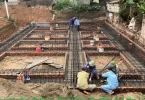

[…] Brick Wall Construction Guide: Complete Building Steps […]
[…] Brick Wall Construction Guide: Complete Building Steps […]
[…] You may also like to read this:Brick Wall Construction Guide: Complete Building Steps […]
[…] Brick Wall Construction Guide: Complete Building Steps […]